Secure Deletion Methods — Shred Files So They Can’t Be Recovered
Why Standard Deletion Fails
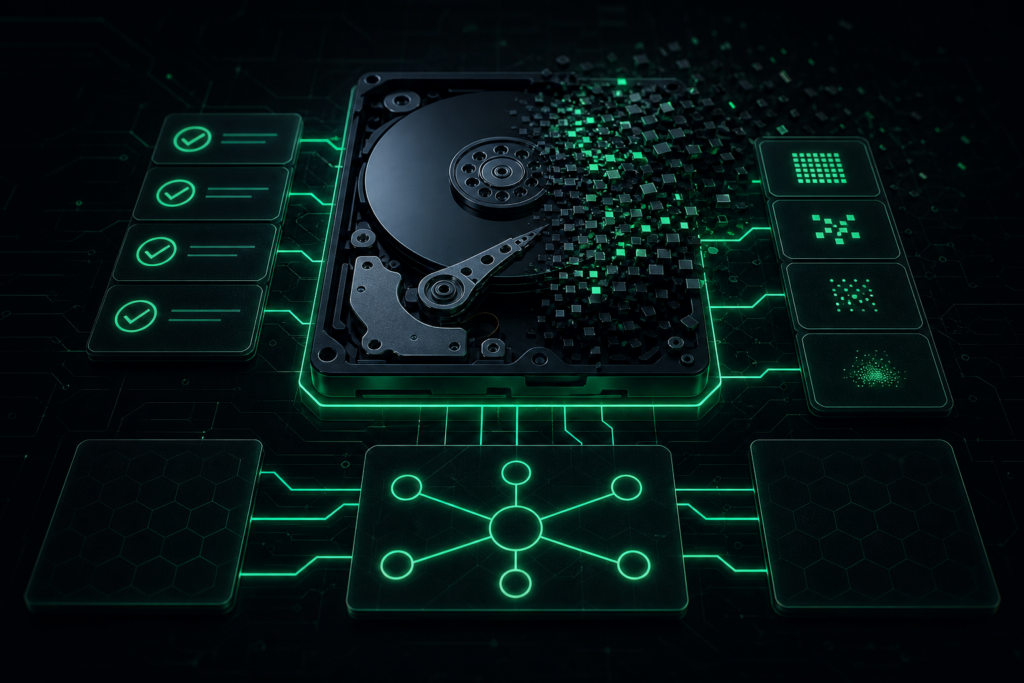
When you hit “delete” on a file, the operating system doesn’t actually erase the data. It marks the space as available for reuse, leaving the original content intact on the drive until overwritten. For anyone concerned with operational security—whether you’re a journalist, a privacy researcher, or someone who handles sensitive metadata—this is a critical gap. File recovery tools can resurrect deleted files in minutes, and law enforcement forensic software is even more aggressive. The only way to counter this is through a secure delete process that overwrites the data with patterns, effectively shredding it beyond recovery.
What Secure Delete Actually Means
Secure deletion isn’t a single method; it’s a set of techniques that ensure data is irrecoverable. The core principle is overwriting: writing new data over the old file’s storage sectors. Standards like the Gutmann method (35 passes) or the simpler DoD 5220.22-M (three passes) are commonly cited, but for modern storage, a single pass of random data is often sufficient for HDDs, while SSDs require a different approach due to wear leveling and TRIM commands. The key is that the overwrite happens at the hardware level, not just in the file system index.
The Role of Dedicated Tools
Native OS delete functions rarely offer this capability. On Windows, the “shift+delete” shortcut only bypasses the Recycle Bin; it doesn’t overwrite. On macOS, the Trash is similarly superficial. This is where utility software like BleachBit becomes essential. BleachBit is an open-source tool that not only cleans browser caches and logs but also includes a file shredder module. It can overwrite free disk space—targeting residual fragments of already-deleted files—and perform targeted secure deletion of specific files or folders. For darknet market researchers or anyone handling vendor PGP keys or transaction logs, integrating BleachBit into a routine OPSEC checklist is non-negotiable.
BleachBit in Practice: What It Does
BleachBit works by identifying and wiping data that standard deletion leaves behind. Its strength lies in configurability: you can select specific applications (Firefox cache, Chrome cookies, temporary system files) and choose overwrite patterns. For a researcher following a market review cycle—say, analyzing a fresh Torzon phishing link—you’d want to clear browser artifacts before moving to the next session. BleachBit’s “Wipe Free Space” function is particularly useful here, as it removes remnants from files that were previously deleted but not securely overwritten.
However, no tool is a silver bullet. BleachBit cannot handle SSDs as effectively as HDDs due to the controller’s wear-leveling algorithms. For SSDs, the most reliable method is ATA Secure Erase, a command built into the drive’s firmware. This is more advanced, requiring tools like hdparm on Linux or Parted Magic, but it’s the only way to guarantee a complete reset. For a researcher’s daily driver, a mix of BleachBit for routine tasks and periodic ATA Secure Erase for entire drives is a solid baseline.
Contextual OPSEC: When Secure Delete Matters Most
The need for rigorous deletion goes beyond personal files. Consider the forensic implications of malware. For example, the PamStealer malware, identified by Jamf Threat Labs, attempts to trick macOS users into granting Full Disk Access via fake system alerts. Once inside, it can exfiltrate sensitive files—keys, wallets, notes—to a command-and-control server at avenger-sync[.]live. If you’ve interacted with such a threat, standard deletion of related files won’t suffice. The malware may have left copies in temporary directories or SQLite databases. A targeted secure delete using BleachBit on those specific folders, followed by a free space wipe, becomes a defensive necessity.
Similarly, consider the defensive pivot against data brokers. As noted in SOCMINT guides, “you cannot manually delete yourself from the internet” because data broker companies constantly scrape public profiles. While you can request removal from these databases, the local copies you’ve saved—scraped CSV exports, cached profile pages—must be handled carefully. If you’re researching how your own digital footprint is exposed, those collections become liability if seized. Shredding them with BleachBit or a similar tool ensures they won’t be used as evidence in a forensic audit.
Methodology: Step-by-Step Secure Deletion
Here’s a practical workflow for a privacy researcher:
| Torzon Market |
torzon7aphar3x4l5b77nsylgyw26kntbi4m2wemrjh72aczeh27f6qd.onion
|
| Omega Market |
omega7yhz7n4vg4yhf2na2qaaaeatdlqvjbj2juc245mr5muxtnuvgyd.onion
|
| BlackOps |
blackoogcnxogvymmebfwfjhx4k7efpgeoeytxtsev2lc4pqlbz54qad.onion
|
| Nexus |
nexusbem4wmo67jt723niftkejivtgxbsbxkb6aesj5gyzj7b3v3mxid.onion
|
| DrugHub |
drughuj7l72ig56pza77eriu7yh6qsao4xb4yasq2qfjusxzuq6rlwqd.onion
|
- Identify the target: Use file search tools to find all copies of the sensitive file. Check Downloads, Documents, temporary folders, and application-specific cache directories.
- Shred individual files: In BleachBit, use the “Shred files” option. Select a standard overwrite pattern (e.g., one pass of random data for modern HDDs). Do not rely on the “delete to Trash” method.
- Wipe free space: After shredding, run BleachBit’s “Wipe Free Space” on the relevant drive. This overwrites areas where deleted fragments may persist.
- Address application caches: Run BleachBit’s cleaning for browsers and messaging apps. Cache files can contain fragments of emails, chat logs, or images that are recoverable.
- For SSDs: Use the manufacturer’s secure erase tool or a utility like
nvme-clion Linux. This is a block-level wipe that resets the entire drive.
This process should be done regularly, not only after a security incident. An attacker or forensic examiner can reconstruct months of activity from residual cache data.
Limitations and Risks
Secure deletion is not magic. On SSDs, the physical NAND cells are managed by the controller; even an ATA Secure Erase command may leave some data on remapped bad blocks. For absolute certainty, physical destruction (shredding, incineration) is the only guarantee. Additionally, cloud-synced files (iCloud, OneDrive, Dropbox) need to be deleted from the server side separately—local shredding doesn’t affect copies on remote infrastructure. Always log out of cloud services before performing a secure delete of local folders.
Another risk is falling for a fake or compromised version of the cleaning tool. Only download BleachBit from the official site (bleachbit.org) or a verified package manager. Third-party download sites may bundle malware. Similarly, be wary of tools that claim to do “military-grade” deletion but are actually snake oil. Verify the tool’s source code if possible—BleachBit is open-source, which is a strong trust indicator.
Integrating Secure Delete into Your Research Workflow
For someone regularly analyzing darknet market links—like Torzon phishing reports or a new DNM scam checklist—cleanly leaving no trace between sessions is essential. After each research block:
- Close all browser windows.
- Run BleachBit with a custom preset that wipes browser caches, cookies, and temporary downloads.
- If you downloaded screenshots or HTML snapshots, shred them individually.
- Consider using a dedicated virtual machine that gets reverted to a clean snapshot after each use. This is the nuclear option—the VM’s entire disk image can be discard, avoiding the need for individual file deletion altogether.
The combination of BleachBit for regular maintenance and snapshot-based VM tools for high-sensitivity tasks forms a robust OPSEC posture. Remember that the goal is not to be invisible—that’s impossible—but to be difficult and costly enough to analyze that an adversary moves on to an easier target.
Closing Thoughts
Secure deletion is a foundational skill in digital privacy, yet it’s frequently overlooked. A tool like BleachBit makes it accessible, but understanding what it actually does—and its limitations—is key to using it effectively. Whether you’re scrubbing data broker scrapes or cleaning up after a malware exposure, the principle is the same: overwrite, verify, and don’t trust the OS’s default delete key. In a landscape where forensic tools are more sophisticated than ever, investing a few minutes in proper deletion is cheap insurance.